Patents and Wall Street

We typically think of innovation as a good thing: Needs inspire ideas, ideas develop into inventions, inventions become patents, and patents make possible new products and services that enhance the quality of human life. But is innovation ever a bad thing? Well, yes, innovation can have a negative effect when it leads to unintended or unforeseen results. In some ways, innovation is to blame for the current U.S. financial crisis. During the past ten years the major players at the heart of the crisis–big Wall Street investment banks and financial companies–developed increasingly complicated and risky investment strategies based on the bundling and trading of mortgages. This has turned out to be a bust. Bankers have been pursuing other innovative strategies, as can be seen in a number of patents and published patent applications assigned to Wall Street firms. We don’t usually think of bankers as inventors, but a change in the interpretation of U.S. patent law in the late 1990s (See State Street Bank & Trust Co. v. Signature Financial Group, Inc.) that allowed the patenting of so-called business methods inspired firms to apply for patents on everything from methods of predicting the value of mortgages to picking stock market winners and losers. Will we see fewer such patents in the future? Probably, since both the government and surviving firms will be much less interested in risky innovation.

Top Ten Financial Companies Ranked by Patents+Published Applications*

1. J.P. Morgan Chase ….. 91
2. Bank of America ….. 86
3. Lehman Brothers ….. 74
4. Goldman Sachs ….. 63
5. Merrill Lynch ….. 49
6. Morgan Stanley ….. 37
7. Fannie Mae ….. 28
8. Wachovia ….. 26
9. AIG ….. 16
10. Freddie Mac ….. 8

*Based on data from the USPTO website.
Posted in Business Method Patents, Financial Patents, Wall Street | Leave a comment

Eco-Patent Commons

The World Business Council for Sustainable Development has developed an Eco-Patent Commons, a website where companies can pledge their environmentally-friendly patents to the public domain. So far, seven companies, Bosch, DuPont, IBM, Nokia, Pitney Bowes, Sony and Xerox have pledged about 75 patents.

Posted in Environmental Patents, Patent Commons, Public Domain | Leave a comment

Arctic Biotechnology Revealed in Patents

Could more effective medicines and tastier ice cream come from the belly of a shrimp living in the icy waters off Greenland? A new report called Bioprospecting in the Arctic, sponsored by the United Nations University Institute for Advanced Studies, looks at the current state of research into useful genetic materials found in plants, animals, fish and microbes living in the far north. Included in the report is a list of 31 patents and patent applications based on Arctic genetic resources, such as reindeer, northern shrimp, Artic fox, Arctic scallop, Atlantic cod and junipers. The list of patents is only the tip of the iceberg, so to speak. A quick esp@cenet search on some of the species named in the patents turns up dozens of additional documents. For example, there are at least ten patents related to the marine microbe rhodothermus marinus.

Posted in arctic species, Biotechnology | Leave a comment

IPI-ConfEx 2009, March 1-5 – Venice, Italy

Registration is now open for next year’s IPI-ConfEx, a patent information conference organized by European patent information professional associations. The host city is Venice-Mestre and the theme is “Best Practices in Patent Information Management and Searching.” If you’re seriously interested in patent information and can afford the airfare and registration, this is definitely an event to attended. Check out the testimonials from past conferences.

Posted in IPI-ConfEX, Patent information conferences | Leave a comment

Patents.com – PatentMonkey Redux

There’s (yet) another way to search patents on the internet: A new patent database/IP exchange portal called Patents.com has just launched. Patents.com is the brainchild of Robert Monster, a hi-tech venture capitalist, authority on market research and former product developer for Procter and Gamble, and Paul Ratcliffe, a patent attorney and founder of PatentMonkey.com, a patent search site that operated from early 2006 to January 2008.

Patents.com searches full text US utility, reissue and design patents, US applications (including plant patent applications) and European patent documents (from 1998 forward?). Detailed content information is lacking, but it appears that US coverage starts in 1976 (2001 for applications, of course). The most recent data retrieved was from patents issued on Aug. 26. EP coverage is more difficult to determine. Several test searches retrieved no patents before 1999. PDFs are available for US docs but not EP docs. Machine translation for fifteen langauges is offered.

Simple search allows simple word searches (no phrase searching or boolean operators). Advanced search allows users to search two or more terms using Boolean operators and wildcards. Expert search allows users to construct complicated fielded queries. Bulk search retrieves multiple documents by patent number. A cluster function groups keywords into a browsable list. At first glance, searches against US docs retrieve similar results as searches done in the USPTO database. It’s more difficult to evaluate searches on EP docs as the coverage is unknown and there seem to be problems with some of the fields. I never could get the date range search to work properly.

Performance is faily fast, but the image view caused Firefox 3.0.1 to crash twice. There’s a lot more to explore… for example the Community and IP Exchange sites…

Posted in Patent databases, patent documents, Patents.com | 1 Comment

Austrian esp@cenet Upgrade – New Content and Search Capabilities

According to an announcement on the esp@cenet web site, an upgrade to the Austrian esp@cenet server has added additional content and capabilities. It now contains AT A and B documents and utility models from 1995 forward. Advanced search features now include full text searching, date range searching and multiple keywords. Prost!

Posted in Austria, espacenet, Patent databases | Leave a comment

2008 World Patent Report

The WIPO recently released its 2008 World Patent Report, which contains all kinds of interesting statistics on patent activity worldwide. In 2006, a stunning 1.76 million new applications were filed worldwide, driven largely by filings in China, Korea and the U.S.

One of the most interesting sections covers patent filings per GDP, population and R&D. Both Japan (#1) and Korea (#2) had more than 2000 new resident applications per million population. (Japan 127 million pop. = / Korea pop. = 49 million) The U.S. (#3) managed just shy of 800 resident filings per million (with a pop. of 300 million). In R&D, Korea was the leader again, with slightly more than 5 applications per million $ of R&D funding. Russia, Japan, China and (surprisingly) New Zealand rounded out the top five. The US ranked #7 and Canada #29. Clearly, Asia is keen on generating IP.

All this demand is creating huge problems for patent offices. In 2006, the USPTO had more that one million pending applications, a 30% increase over 2004. Japan has about 800K pending applications, up from 600K in 2004. The EPO, on the other hand, has about 250,000 pending applications, which is about the same as 2004 and 2005. It takes about 40 months on average for the EPO to process an application but only 30 months at the JPO and USPTO. The Korean IP Office processes applications in about 20 months.

Posted in EPO, JPO, Patent statistics, USPTO, WIPO | Leave a comment

How are Engineering Librarians Using Patent Information?


A few months ago I surveyed my fellow academic engineering librarians to find out how they were using web-based patent databases in their day-to-day work with students and faculty. Patent literature has had a role in engineering education, especially design engineering courses, for many decades. Of course, before the mid-1990s when free patent databases started appearing on the web, most engineering students did not have easy access to patent information unless they were lucky enough to live near a patent depository library.

Forty people completed the survey. The results were pretty much what I expected. Academic engineering librarians are heavy users of patent databases. 57.5% reported giving workshops on patent searching to undergraduate engineering students, while 52.5% delivered workshops to graduate students. The most popular databases taught were the USPTO, Google Patents and FreePatentsOnline.

Librarians also reported frequent usage of patent databases to answer a variety of questions from students and faculty. 86.8% reported helping someone locate a patent document. 78% reported helping someone do a general search (inventor, keyword, assignee, etc.) and 52.6% reported helping someone do a patent search using classification. The most popular databases were the USPTO, Google Patents and esp@cenet.

When asked to rank desirable features of patent databases, librarians overwhelming (87.2%) suggested multi-page saving/printing of patent documents and (74.4%) making PDF the standard format. Other popular features included patent classification search tools and the ability to download/save search results.

The complete results of the survey are available at http://hdl.handle.net/1974/1377.

Posted in Engineering education, Librarians, Patent databases | 3 Comments

Patent Buddy Ranks Patent Attorneys

Patent Buddy is a new service that provides data (obtained from the USPTO) on registered patent attorneys and their employment histories since 2001. It claims to have data on 38,669 attorneys from ~13,000 organizations. You can search by name, registration #, organization, and geographic location. (You can search by Canadian city and postal code but not province, although it appears that provinces eventually will be added.)

Each individual is given an experience ranking, although it’s unclear how this is calculated. You can also see their employment history, patents (although none I viewed listed any) and co-workers. Each organization is ranked by growth curve and experience. Again… details are sketchy about how the rankings are calculated.

More information is available in an article in Finance and Commerce, a Minneapolis-based business journal.

It’s a very interesting start-up with a lot of potential… I think it would be especially useful to independent inventors and small firms shopping for a patent firm, and new patent attorneys job hunting.

Posted in Patent Agents, Patent Attorneys, Patent Buddy | 1 Comment

Speedo’s New Swimsuit Big Winner in Beijing

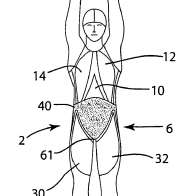
Speedo’s new swimsuit, called the Fastskin LZR Racer, is grabbing attention at the Beijing Olympics. Two recently published US patent applications, US20080141431 and US20080141430, may reveal the technical secrets behind the innovative design that some say is responsible for the record-breaking performances of swimmers such as Michael Phelps of the US.

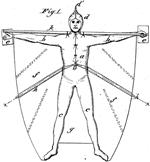
Inventors have been improving swimsuits for well over a hundred years, some less successful than others, as shown by this example from the 19th century. (US243834)

Posted in Olympics, Speedo, swimsuits | Leave a comment