USPTO Annual Report FY2008 – 495,095 new applications!

The USPTO released its annual report for FY2008 and the numbers are staggering.

According to preliminary statistics, inventors filed a record-breaking 495,095 applications from Oct. 1, 2007-Sept. 30, 2008. This is a 5.7 percent increase over FY2007. Interestingly, there was a 33.7 percent increase in plant patent applications from 1,002 to 1,340. Design and utility applications increased about 5 percent. There basically no change in the number of reissue applications.

The number of applications pending has increased to 1,208,076, an 8.6 percent increase from last year. Pendency for UPR applications is 32.2 months. The highest pendency is 43.6 months in the Communications Technology Centre.

Issued patents dropped slightly to 182,556, keeping in line with the USPTO’s drive to improve patent quality through more rigorous examination practices. Published applications increased to 309,194, a 2.2 percent increase. There was a big jump (25 precent) in the number of abandoned applications, suggesting perhaps that applicants are giving up on weaker applications. A total of 208,610 applications were abandoned as opposed to 166,000 last year.

The USPTO also hired another 600 patent examiners in FY2008. The total number of examiners is now 6,055. In 2004, the Patent Examing Corps numbered 3,753.

Posted in Patent statistics, USPTO | Leave a comment

USPTO Issues 68 New Secrecy Orders in 2008


A blog posting at the New Scientist magazine claims that the USPTO issued secrecy orders on 68 new patent applications and rescinded 47 older orders in the year ending Sept. 30. A total of 5,023 secrecy orders are still in effect. The USPTO reports the number of secret cases in condition for allowance in its annual report, which is usually released in November. The annual report for 2006-2007 states that there were 3,081 such cases as of Sept. 2007.

Posted in Secrecy orders, USPTO | Leave a comment

End in Sight for IP Australia’s PatSearch System

IP Australia has announced that it will update Patsearch, its legacy patent search system, weekly on Mondays starting Nov. 22, 2008. The system will be decommissioned in February 2009. AusPat, the new patent search system, was launched in April 2008 and contains bibliographic data from about 1970 forward and full text from 1998 forward. Australian patent documents are also available in esp@cenet and PatentLens (1998+). The Australian Patent Office was established in 1904. IP Australia has a long-term project to scan and make searchable all patent specifications back to this date.

Posted in Australian patents, IP Australia, Patent databases | 1 Comment

Patent Offices Agree on Work Sharing Initiative

Joff Wild at IAM Magazine reports that the EPO, JPO, USPTO, SIPO and KIPO have just reached an agreement on a major work-sharing initiative that will reduce duplication and enhance patent examination. Part of the agreement includes the creation of 10 “Foundation Projects”. The projects (as described in an EPO press release) that could have the most impact on public users of patent information include:

A) Common documentation database (lead: EPO)
Aim: To bring together a common set of relevant patent and non-patent literature from around the world to assist patent examiners in their prior art searches.

B) Common approach to hybrid classification (lead: EPO)
Aim: To enable joint and efficient updating of patent classification and facilitate the reuse of work among the patent offices.

C) Common Approach to Sharing and Documenting Search Strategies (lead: USPTO)
Aim: To promote reutilization by enabling the patent examiners of each office to understand each other’s search strategy

D) Common Search and Examination Support Tools (lead: USPTO)
Aim: To establish a system of common search and examination tools to facilitate work-sharing

E) Common Access to Search and Examination Results (lead: JPO)
Aim: To enable examiners to find one-stop references in the dossier information of other offices, such as search and examination results.
To conduct the priority document exchange (PDX) to reduce the cost of ordering copies of priority documents for applicants and the administrative costs of electronic processing for offices.

F) Common Application Format (lead: JPO)
Aim: To facilitate the filing procedure of each office by using a Common Application Format; and by using electronic or digitized patent application filing (in XML format) and subsequent processing and publication in XML format.

Posted in IP5, Patent databases, patent information dissemination | Leave a comment

New Esp@cenet Improvements

It’s October… the time of year when patent searchers wait and watch for news from esp@cenet. The EPO rolled out its latest esp@cenet improvements this week.

The most impressive is a beta search function called SmartSearch. SmartSearch allows the user to enter terms such as inventor name, keyword, publication number, date, etc. in any order and without having to specify a search field for each term. For example, entering “Bombardier CA 2007” will cause SmartSearch to look for Bombardier as the inventor/applicant, Canadian patent documents (2 letters indicating the country code) and 2007 as the publication date.

Clicking on “Refine Search” in a SmartSearch search results list will take you to the SmartSearch search page where you can explore more features. There are 22 search field identifiers, some of them representing more than one field. For example, TA searches both title and abstract. A maximum of 21 search terms can be combined with Boolean operators and a maximum of 4 search terms per search field are allowed. Date range searching and proximity operators are only available at the EP level. Full text searching of the claims and specification is not possible. A maximum of five brackets can be used per search. Left truncation is not permitted.

esp@cenet also has added an export function that exports bibliographic data from up to 30 records at a time from search hit lists and documents stored in the “My Patents List”. The fields include title, publication number, publication date, inventor(s), applicant(s), international classification, European classification, application number, date of application, priority number(s) and cited documents. The capacity of the “My Patents List” has been expanded to 100 documents (previously 20).

Esp@cenet also has a new logo celebrating its tenth anniversary.

Posted in EPO, espacenet | 1 Comment

SumoBrain Offers Free Registration

SumoBrain, the patent search system from the creators of FreePatentsOnline, is now offering free accounts. SumoBrain features full-text cross-collection searching of US patents and applications, EP patents and applications, PCT documents and Japanese abstracts, portfolios, alerts, and PDF download capabilities (for a fee). SumoBrain’s content and search engine are very similar to FPO. And like FPO, registered users can save up to 1000 documents in 1-5 portfolios, and download bibliographic data from up to 250 records (at a time) in spreadsheet format.

Posted in FreePatentsOnline, Patent databases, SumoBrain | Leave a comment

Scientific Fraud and Patents

According to a report in the Oct. 2 issue of Nature, IP Australia is taking some heat for issuing a patent (AU2004309300B B2) to discredited Korean scientist Dr. Woo Suk Hwang that was based on fabricated data. In 2004 and 2005 Dr. Hwang claimed to have created a stem-cell line from a cloned human embryo. Hwang’s claims, it was discovered, were a complete fraud. He lost his university job, was convicted of various crimes including embezzlement and his published papers were retracted. However, his university continued to prosecute patent applications based on his work.

Unlike scientific papers, patents are not peer-reviewed. Patent offices issue patents based on the legal criteria put for under national patent laws. They don’t test the validity of the data submitted with a patent application. If they did, the patent system would probably grind to a halt. Of course, there are penalties for inventors who lie or commit misrepresentations in a patent application. But this usually applies to things like the date of conception of the invention, true inventorship, etc.

Posted in fraud, Hwang, IP Australia, Scientific ethics | Leave a comment

USPC Class Orders 1879, 1880


On Sept. 2, the USPTO issued Classification Order 1879 covering changes to design class D14, Recording, Communication, or Information Retrieval Equipment. New subclasses have been established for flash type memory drives, karaoke systems and digital media recorders. There are approximately 40,000 patents classified in Class D14.

The USPTO also published on Sept. 2 Classification Order 1880 covering a new cross-reference art collection labeled G9B, Information Storage Based on Relative Movement Between Record Carrier and Transducer. The order provides little information on the origin of this class, other than to say that it was established in 1979 and is connected to something called an IdT scheme, which is a European classification system. Obviously, it resembles an IPC class and not a USPC class. There are no patents classified in G9B at this time. Perhaps it is a new e-subclass.

Posted in classification orders, USPC | Leave a comment

U.S. Patent Counts, Q3 2008

The USPTO published 72,421 patent applications (A docs) in Q3, a 3 percent decrease over the same quarter last year and a 6.78 percent drop from the previous quarter. On October 2, the USPTO published a record-breaking 8,955 patent applications. If these had been counted in Q3, the total would have been a hefty 81,376. The USPTO is on track to publish over 310,000 applications this year. Approximately 1.87 million plant and utilty patent applications have been published since 2001.

The number of issued patents (B docs) in Q3 dropped to 40,869, a 17 percent drop from the previous quarter and a 6 percent decline from the same quarter last year. This was the lowest total in almost three years. Weekly issues remained flat for most of the quarter, dropping precipitously in the second half of September. The USPTO’s campaign to hold the line on low quality patents appears to be having an impact on output.

Table 1. Quaterly Patent and PGPub Counts*

Qn ….. Patents …..PGPubs ….. Total
Q1 ….. 43,657 ….. 77,962 ….. 121,619
Q2 ….. 49,353 ….. 77,691 ….. 127,044
Q3 ….. 40,869 ….. 72,421 ….. 113,290
Q4

*Based on preliminary weekly data from the USPTO website. Totals may change after the fact due to withdrawn patents and published applications.

Table 2. Weekly Averages and Medians (Q3)

Patents ….. 3,166 ….. 3,451
PGPubs ….. 6,161 ….. 6,315

Table 3. Number Ranges for 2008 (Totals)

Patents ….. 7,313,829 – 7,430,762 (116,331)
Reissues ….. RE39,964 – RE40,562 (561)
PGPubs ….. 2008/0000001 – 2008/0235840 (235,743)
Designs ….. D558,426 – D577,875 (19,424)
Plants ….. PP18,373 – PP19,278 (906)
SIRs ….. H2,208 – H2,223 (16)

Posted in Patent statistics | Leave a comment

Comparison of Free Patent Databases

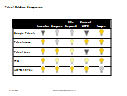
Patent databases continue to proliferate on the internet. The most recent addition is Patents.com, which describes itself as “one of the most comprehensive free patent search services on the web.” I get a little annoyed when I see claims such as this, especially when the database provider doesn’t state the contents and dates of coverage. Having a great search engine doesn’t mean much if the underlying data is incomplete. So I figured that it was prime time to update my comparison of patent database search engines.

When I did this last in February 2007 I compared Delpion, FreePatentsOnline, Google Patents, Patent Lens, Patent Monkey and the USPTO website. This time I compared five patent databases: Google Patents, FreePatentsOnline, Patents.com, Patents Lens and the USPTO patent database. Patent Monkey was absorbed by Patents.com in 2007. I decided to drop Delphion because it offers access only to US issued patents. Google Patents has added data for US published applications but it’s unclear how frequently the data is updated. The other three non-USPTO databases are updated weekly.

All test searches were restricted to US patents issued from 1976 forward in order to allow for comparisons between databases. (Some databases include non-US patents and/or patents prior to 1976.) My search categories were inventor name, assignee name, keyword in title, and current US patent classification.

In the inventor search category, most of the databases came very close or slightly exceeded the results from the USPTO database. The only exception was Google Patents, which failed miserably at finding patents by inventor name. Perhaps Google has disabled their inventor name search.
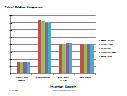


Table 1. Inventor Name Search Comparison


Company name search results were also consistent across most of the databases. Again, the exception was Google Patents which found significantly fewer patents for two of the four companies searched. Patent Lens performed well except that it found approximately 200 fewer patents assigned to Bombardier than the other databases (except for Google). This might be explained by the fact that Bombardier’s patent portfolio includes more than 200 design patents which are not covered in Patent Lens. FreePatentsOnline did poorly with “Queen’s University”, possibly because the apostrophe threw off the search engine.


Table 2. Company Name Search Comparison

The title keyword search produced varied results. Patent Lens, Patents.com and FPO did very well in three of the four searches. Google Patents found significantly fewer patents in all four searches. In a couple of searches FPO actually retrieved more patents that the USPTO database. But this might be because FPO searches withdrawn patents, which are not included in the USPTO database.


Table 3. Title Keyword Search Comparison

The best scoring database in the current US patent classification search was Patents.com, which produced identical or very close results to the USPTO database. FreePatentsOnline also did well, except when asked to retrieve patents in 623/1.1. The decimal subclass might have confused FPO’s search engine. Google Patents and Patent Lens did poorly. Patent Lens does not index USPC or IPC codes, so the only way to search them is to do a crude keyword search against the front page. The results are next to useless.
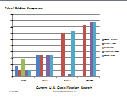
Table 4. USPC Search Comparison

Overall, the USPTO database search engine produced the most reliable search results. Patents.com performs well for USPC and inventor name searches. Patent Lens is good for inventor, assignee and keyword searches but not USPC searches. FPO is almost as good as the USPTO database but punctuation may throw off search results. I would not recommend Google Patents for anything except retrieving PDF copies of known patents. Its search results are simply too unpredictable and incomplete.

The USPTO does score poorly in the patent document image category because its images are stored in TIFF format rather than PDF. Users must install a TIFF viewer in their browser in order to view patent documents from the USPTO website and then the documents must be viewed or printed one page at a time. The other four databases in this review support mutli-page PDF downloads.

Table 5. Patent Database Summary

Posted in Patent databases | 12 Comments